Gluco6 Official Website › Journal › TeaCrine and No Stimulants
TeaCrine And A Label That Says No Stimulants
A feature strip that says No Stimulants and an ingredient list that names TeaCrine. Both belong to the seller, and without an amount neither can be settled.
- Both statements belong to the seller. The feature strip says No Stimulants; the ingredient list names TeaCrine.
- TeaCrine is a trade name for theacrine, a purine alkaloid studied head to head with caffeine for energy and focus.
- The human trials measured energy, focus, mood and vital signs. A search for theacrine with human blood-glucose outcomes returns nothing.
- Without an amount, neither statement can be settled. The studied range is 200 to 400 mg a day; this whole blend is 525 mg.
The Gluco6 feature strip says the formula contains no stimulants. Its own ingredient list names TeaCrine, a branded form of theacrine, which is a purine alkaloid related to caffeine and studied against caffeine for energy and focus. Both statements are the seller’s. Because the label prints no amount for TeaCrine, neither can be settled from the bottle.

Two statements from one seller
The seller’s feature strip lists six marks for the formula: natural formula, plant ingredients, non-GMO, easy to swallow, no stimulants and non-habit forming. The ingredient list, on the same material, names TeaCrine.
Both are the seller’s statements rather than this desk’s — and this article prints them together because a reader who avoids stimulants deserves to see them in the same place. Nothing here accuses anyone of anything. The two lines simply sit badly together, and the figure that would settle them is not published.
TeaCrine is a trade name; theacrine is a compound
TeaCrine is a branded ingredient. Theacrine is the molecule inside it, 1,3,7,9-tetramethyluric acid, a purine alkaloid found in kucha tea and cupuaçu. Caffeine is 1,3,7-trimethylxanthine, from the same broad family, which is why the two are repeatedly studied side by side.
Keeping the two words apart matters more than it looks. A paper on theacrine is evidence about the molecule — not about a particular branded powder, its purity, or the amount inside a capsule that publishes none. Everything below is about theacrine, the compound sold under the TeaCrine name, and the article on the six names explains why a branded name is the hardest kind to check.
Why a branded name is harder to research
A buyer who reads “theacrine” can search for it. A buyer who reads “TeaCrine” searches a trademark and finds a supplier’s page first. That is not unique to this label, and it is one of the reasons a named list is worth reading name by name rather than glancing at.
What the human trials measured
Two human studies of theacrine on its own are worth knowing, and both are safety and performance work rather than metabolic work.
Taylor and colleagues, 2016 gave 60 adults 200 mg or 300 mg a day for eight weeks and reported every clinical safety marker within normal limits, with no habituation across the period. Ziegenfuss and colleagues, 2017 used 200 mg and 400 mg a day for seven days and then a single 200 mg dose in a placebo-controlled crossover. Subjective energy, focus and concentration went up; there was no dose-response between 200 mg and 400 mg; and resting heart rate and haemodynamic measures did not change.
| Study | Amount and duration | What it measured | What it cannot support |
|---|---|---|---|
| Taylor 2016 | 200 or 300 mg a day, 8 weeks, 60 adults | Clinical safety markers, habituation | Any blood glucose effect |
| Ziegenfuss 2017 | 200 or 400 mg a day, 7 days, plus a single 200 mg dose | Subjective energy, focus, mood; heart rate and haemodynamics | Objective cognitive gains, and anything metabolic |
Both trials tested theacrine on its own, which is why they are cited here. A third study often quoted for this ingredient tested it alongside 150 mg of caffeine, so it cannot support a statement about theacrine by itself.
The blood glucose claim, and what sits behind it
The seller’s own line for this ingredient is that TeaCrine “supports healthy blood glucose metabolism”, alongside claims about cognition, focus, mood and mental energy.
A search of the published human literature for theacrine with blood glucose outcomes returns no records. Not a weak trial, not a mixed result — no human trial of this compound has measured blood glucose at all. That is the plainest sentence in this article and the one worth carrying away.
So of the four things the seller says about this ingredient, the two that human trials have looked at are energy and focus, and those were self-reported. The blood glucose line has no human trial behind it, which is a different situation from an ingredient whose trials came out badly. The how-it-works page covers the same ground for the formula as a whole.
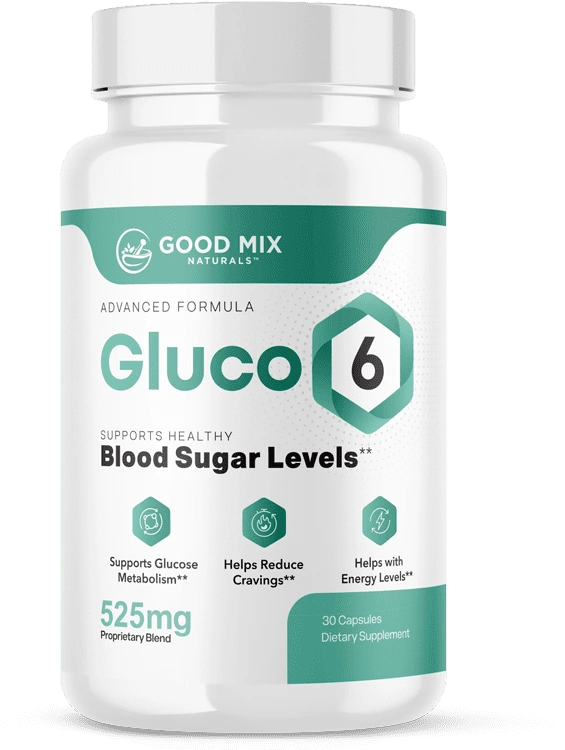
Order Gluco6 from the official website
One capsule in the morning, 30 to a bottle, one-time payment. Sixty days to decide, bottles back even if empty.
$39 to $69 a bottle · 60 days to change your mind, bottles back even if empty
Order Gluco6Can the two statements be reconciled?
Possibly — though not from the label. There is a version of this formula in which TeaCrine is present at a few milligrams, produces nothing anyone would call a stimulant effect, and the feature strip is defensible. There is another in which it sits near the studied range and the strip is not. The whole blend is 525 mg, which rules nothing out at either end.
One number would settle it, and it is the number a Supplement Facts panel would have carried.
| What a checkable statement needs | Published for Gluco6? |
|---|---|
| The amount of TeaCrine in a serving | Not published |
| A stated definition of what the seller counts as a stimulant | Not published |
| A trial of the finished capsule | None published |
| The serving the statement refers to | One capsule a day, from the seller’s FAQ |
| An independent assay of the blend | Not published |
One of five. That is why this desk prints both of the seller’s statements and settles neither, and why the label page keeps the blank lines blank.
What a supplement label is allowed to say
Three public rules explain the shape of every sentence on a bottle like this, and they are worth a paragraph each because they make marketing copy much easier to read.
Structure/function claims are statements about an effect on a normal structure or function of the body. A manufacturer may make one without pre-approval, has to notify the FDA within 30 days, and must carry the disclaimer saying the statement has not been evaluated and the product is not intended to diagnose, treat, cure or prevent any disease, because only a drug can legally make such a claim.
21 CFR 101.93 sets that disclaimer’s exact wording and draws the line: a product bearing a disease claim is subject to regulation as a drug. And the FTC’s health products guidance governs the advertising rather than the label, asking for competent and reliable scientific evidence, generally randomised controlled human trials, and requiring that any claim about the level of that support is itself true.
Held against those three, a no-stimulants feature mark is not a regulated claim at all. It is a marketing statement about the formula, and the only thing that could verify it is the formula.
Who this entry actually matters to
For most buyers this is a footnote. For four groups it is the deciding line on the label, and they are the reason the entry is worth an article.
- Anyone who avoids caffeine and caffeine-like compounds on purpose, for sleep, anxiety, palpitations or a clinician’s advice.
- Anyone taking it before breakfast, which is the seller’s own direction: one capsule in the morning, before breakfast, with a glass of water. An alkaloid on an empty stomach is a different experience from one with food.
- Anyone already using a pre-workout or an energy product. Branded alkaloids appear across that category, and two products can stack without either one printing a total.
- Anyone whose reason for buying is the four claims on the front. The benefits page sets out what those four lines cover and what they do not.
The verdict on this entry
TeaCrine is the entry a careful reader should look at hardest — and the reason is not safety. The two human trials of theacrine on its own reported clinical markers within normal limits at 200 to 300 mg a day for eight weeks and no change in resting heart rate. It is the reconciliation that fails, not the ingredient.
A feature strip that says no stimulants and an ingredient list that names a caffeine-comparator alkaloid cannot both be checked without a milligram figure, and there is not one. If stimulants are the thing you are screening for, that is the answer: the label names the entry, which is more than most, and it does not tell you how much. Who it is for goes through the same decision for the formula as a whole, and the guarantee is what covers a first bottle either way.
A note, because this is a blood sugar article. Gluco6 is a dietary supplement for healthy adults aged 18 and over. It does not treat, prevent or manage diabetes or prediabetes, and it is not a substitute for prescribed medicine. If you take insulin, a sulfonylurea such as glipizide or glimepiride, or a meglitinide such as repaglinide, those medicines already lower blood glucose, and NIDDK names them as the drugs that cause hypoglycaemia. Four of the six names on this label have been studied for the same effect and the label prints no amount for any of them, so nobody can tell you how much of it a capsule carries. Take the bottle to the clinician who set your dose before the first capsule, and treat blood glucose at or below 70 mg/dL as something to act on rather than watch.
Sources cited in this article
- Taylor L, Mumford P, Roberts M, Hayward S, Mullins J, Urbina S, Wilborn C. Safety of TeaCrine, a non-habituating, naturally-occurring purine alkaloid over eight weeks of continuous use. J Int Soc Sports Nutr. 2016;13:2. https://pubmed.ncbi.nlm.nih.gov/26766930/
- Ziegenfuss TN, Habowski SM, Sandrock JE, Kedia AW, Kerksick CM, Lopez HL. A Two-Part Approach to Examine the Effects of Theacrine (TeaCrine) Supplementation on Oxygen Consumption, Hemodynamic Responses, and Subjective Measures of Cognitive and Psychometric Parameters. J Diet Suppl. 2017;14(1):9-24. https://pubmed.ncbi.nlm.nih.gov/27164220/
- Electronic Code of Federal Regulations. 21 CFR 101.93 - Certain types of statements for dietary supplements. https://www.ecfr.gov/current/title-21/chapter-I/subchapter-B/part-101/subpart-F/section-101.93
- U.S. Food and Drug Administration. Structure/Function Claims. https://www.fda.gov/food/nutrition-food-labeling-and-critical-foods/structurefunction-claims
- Federal Trade Commission. Health Products Compliance Guidance. https://www.ftc.gov/business-guidance/resources/health-products-compliance-guidance