Gluco6 Official Website › Gluco6 Side Effects
Gluco6 Side Effects: Safety Points to Check
The seller states that no side effects have been reported for Gluco6.
Six ingredients are named on the label, so you can check them for allergies. If you take medication for blood sugar, speak to your prescriber first.
See who Gluco6 is for.
What the six Gluco6 names mean for safety
A named list is worth most on a safety page. Six names can be read against an allergy, a medicine cabinet and a personal rule about stimulants, and three of the six carry specific, documented cautions that are worth knowing before the first capsule rather than after.
Green tea extract and the liver
This is the largest safety file attached to any of the six, and it is not a marginal one. LiverTox, maintained by NIDDK, scores green tea extract A: a well established cause of clinically apparent liver injury, with more than 100 published cases, some ending in acute liver failure, transplant or death. Brewed green tea as a drink is not implicated; concentrated extract is.
The injury is idiosyncratic rather than dose-dependent — so there is no safe threshold to quote. What the literature does give is a range: the US Pharmacopeia review reports cases at EGCG intakes from about 140 mg a day upward. The Gluco6 label names green tea and gives no EGCG figure, so a reader cannot locate this capsule on that range.
The same USP review found that taking green tea extract on an empty stomach significantly increases catechin absorption, which is why its monograph requires the label caution “do not take on an empty stomach, take with food”. The Gluco6 direction is one capsule in the morning before breakfast. Those two instructions point in opposite directions, and a reader who would rather follow the pharmacopeia than the sales page can take the capsule with a meal instead.
Chromium, and what no upper limit means
NIH’s Office of Dietary Supplements is explicit that the Food and Nutrition Board has not set a Tolerable Upper Intake Level for chromium, while noting that the data are limited and that caution may be warranted, particularly for people with kidney or liver disease. No upper limit has been set is not the same sentence as no amount can be too much, and the fact sheet itself lists isolated case reports of liver dysfunction, renal failure, rhabdomyolysis and low blood sugar.
It also carries an interaction most readers will not expect: chromium can reduce the absorption of levothyroxine, so the two are usually separated by several hours. If you take thyroid medication in the morning, that timing question is worth raising before you add a morning capsule.
Cinnamon, species and coumarin
NCCIH makes two points that apply directly to this label. Cinnamon products often fail to identify the species or the plant part; and cassia cinnamon contains coumarin, which in prolonged high intake could be a problem for people with liver disease. The bottle prints “Cinnamon” on its own, so neither question can be answered from the front of the pack.
The two remaining names are quieter. Gymnema’s issue is an interaction rather than a toxicity and it has a section of its own below. Sukre’s published safety record is a 28-day study in rats, which found no adverse effects at up to 7,200 mg/kg a day and was paid for by the company that owns the name; there is no human safety data on it at all.
TeaCrine, caffeine and the Gluco6 label
The seller’s feature strip says “No Stimulants”. The ingredient list names TeaCrine, a branded form of theacrine, which is related to caffeine. Both statements are the seller’s, and both are printed here because without a weight beside the name there is no way to settle which one governs.
Theacrine is 1,3,7,9-tetramethyluric acid, a purine alkaloid from kucha tea. Its two controlled human trials were designed around exactly the quality a reader avoiding stimulants is worried about — Ziegenfuss 2017 gave 200 and 400 mg a day and measured energy, focus and concentration against caffeine and placebo, and reported no change in resting heart rate or haemodynamics.
Taylor 2016 is the longer look: 200 or 300 mg a day for eight weeks in 60 adults, with the clinical safety panel inside normal limits throughout and no habituation, which is the finding that most separates it from caffeine. So the fair summary is that theacrine behaves gently in the trials that exist, and that a product naming it while describing itself as stimulant-free is making two statements a buyer has to choose between.
If you avoid stimulants on medical advice, treat the name on the list as the governing fact rather than the strip on the sales page. If you avoid them because caffeine keeps you awake, the relevant point is that theacrine is not caffeine and the capsule is taken in the morning.

The one Gluco6 interaction worth a conversation
Insulin and sulfonylureas lower blood glucose on their own. Anything taken alongside them that also acted on glucose could add to that effect, and the label does not print how much of any of the six ingredients a capsule carries. If you take medicine for diabetes, that is the conversation to have with the prescriber before the first capsule.
Named precisely, this is who it applies to: anyone taking insulin, a sulfonylurea such as glipizide or glimepiride, or a meglitinide such as repaglinide. NIDDK names those three classes as the drugs that cause low blood glucose, because they lower it whether or not the body needs them to.
The mechanism of the problem is addition — not interference. A prescription for diabetes lowers blood glucose deliberately and to a target somebody chose, and several of the plants and the mineral on this panel have been studied doing a weaker, less predictable version of the same thing. NIH’s Office of Dietary Supplements states it directly for chromium: it might have an additive effect with metformin or other antidiabetes medications and thus might increase the risk of hypoglycemia, and taken with insulin it could increase that risk. Because the blend is undivided, the size of that addition cannot be estimated by anyone, including this desk.
The numbers to know are short. Act at 70 mg/dL or below if you have diabetes; MedlinePlus puts the threshold at 55 mg/dL for someone who does not. Severely low blood glucose is defined by needing someone else’s help rather than by a reading, and it can cause unconsciousness, coma or death.
The symptoms are worth reading once before they matter: shakiness, sweating, a fast heartbeat, confusion, irritability, sudden hunger, dizziness or blurred vision. In somebody who takes one of the three drug classes above, that combination is treated as low blood sugar until a meter says otherwise.
So the conversation to have is with whoever set your dose, before the first capsule, and it is about that dose rather than about whether supplements are worthwhile. If you start it anyway, the fortnight after the first capsule is when you test as usual and write the readings down. Who this is for covers the rest of the groups the audience statement excludes.
Sources on Gluco6 ingredient safety
- LiverTox: Clinical and Research Information on Drug-Induced Liver Injury. Green Tea. National Institute of Diabetes and Digestive and Kidney Diseases, Bethesda (MD). NBK547925. https://www.ncbi.nlm.nih.gov/books/NBK547925/
- Oketch-Rabah HA, Roe AL, Rider CV, et al. United States Pharmacopeia (USP) comprehensive review of the hepatotoxicity of green tea extracts. Toxicol Rep. 2020;7:386-402. https://pubmed.ncbi.nlm.nih.gov/32140423/
- NIH Office of Dietary Supplements. Chromium: Fact Sheet for Health Professionals. https://ods.od.nih.gov/factsheets/Chromium-HealthProfessional/
- National Center for Complementary and Integrative Health. Cinnamon: Usefulness and Safety. https://www.nccih.nih.gov/health/cinnamon
- Dziwenka M, Emmel KV. Genotoxicity and Repeat-Dose 28-day Oral Toxicological Evaluation of Sukre, a Purified l-Arabinose From Acacia Hydrolysate. Int J Toxicol. 2026;45(2):190-197. https://pubmed.ncbi.nlm.nih.gov/41093367/
- Taylor L, Mumford P, Roberts M, Hayward S, Mullins J, Urbina S, Wilborn C. Safety of TeaCrine, a non-habituating, naturally-occurring purine alkaloid over eight weeks of continuous use. J Int Soc Sports Nutr. 2016;13:2. https://pubmed.ncbi.nlm.nih.gov/26766930/
- Ziegenfuss TN, Habowski SM, Sandrock JE, Kedia AW, Kerksick CM, Lopez HL. A Two-Part Approach to Examine the Effects of Theacrine (TeaCrine) Supplementation on Oxygen Consumption, Hemodynamic Responses, and Subjective Measures of Cognitive and Psychometric Parameters. J Diet Suppl. 2017;14(1):9-24. https://pubmed.ncbi.nlm.nih.gov/27164220/
- National Institute of Diabetes and Digestive and Kidney Diseases. Low Blood Glucose (Hypoglycemia). https://www.niddk.nih.gov/health-information/diabetes/overview/preventing-problems/low-blood-glucose-hypoglycemia
- MedlinePlus, U.S. National Library of Medicine. Hypoglycemia. https://medlineplus.gov/hypoglycemia.html
Who writes this Gluco6 page?
This desk publishes what the bottle says and marks the edge of it. The four claims below are the ones a sceptical reader can audit in ten minutes, which is the only reason to make them:
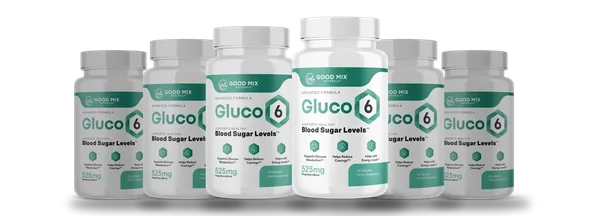
- The bottle is the source. The four claim lines, the six ingredient names, the 525 mg blend total and the capsule count come from the printed label and the seller’s own artwork. Prices come from the seller’s order page, read on 18 September 2026, not from a review column.
- The blend total is printed as a ceiling, not a dose. The label gives one figure for six ingredients together, so no page here splits it, ranks it or compares a single ingredient against a research dose as though it had one.
- Sources are real and linked in the sentence. Every study cited here was confirmed against its PubMed record before it was written down, and every government page was opened and checked by its title rather than assumed.
- Corrections change the date. Write to [email protected] and the review date at the foot of the page moves forward.
We earn when you buy. Gluco6formula is the USA Authorized Gluco6 Retailer named at the top of this page, and this website makes money on orders placed through it. That is exactly why the note about what a named list without amounts is worth, the three four-star reviews and the plain statement that Gluco6 is not a diabetes treatment are here: they are where our interest and yours pull apart, and you should be able to watch us choose.
Order support on +1 (302) 200-3480 handles tracking, changes, cancellations and refunds, and the sales address the supplier publishes is [email protected]. Neither is a sales line, and this website never presents them as a way to place an order: orders go through the checkout only.
Order Gluco6 from the official website
Three packs, one-time payment, and 60 days to change your mind.
$39 to $69 a bottle · 60 days to change your mind, bottles back even if empty
Order Gluco6 On The Official WebsiteOne-time payment, no subscription · 60-day money-back guarantee · lot GLU-26/GL-3620