Gluco6 Official Website › Reference Guides
Blood Sugar Supplement Reference Guides
Two guides written for anyone comparing blood sugar supplements, not only for people looking at Gluco6. The first explains what a label in this category can tell you and where a proprietary blend total stops being useful. The second is a checklist, scored against Gluco6 itself, item by item.
Both are long reads with real citations and neither is a sales page.
The two guides
How to read a blood sugar supplement label
What a Supplement Facts panel is required to carry, what a proprietary blend total means, and which figures decide whether a claim can be checked at all.
Choosing a blood sugar supplement
Eight things worth checking before buying anything in this category, and how Gluco6 scores against the same eight.
Which one to read first
Read the label guide first if you are holding a bottle, or looking at a photograph of one, and want to know what the words on it are worth. It works through the panel, the blend rule, the one deduction a blend line allows, and the point where the arithmetic runs out.
Read the checklist first if you have not chosen yet and want a method. It is eight questions you can run against any bottle in ten minutes, and the second half runs them against the capsule this website sells, including the four it does not pass.
Together they take about half an hour — neither is a sales page, neither recommends a product, and both are written so that they would still be useful to somebody who buys something else entirely.
The questions these guides answer
- ✓What is a Supplement Facts panel actually required to print?
- ✓What does one weight for six ingredients tell a buyer, and what does it hide?
- ✓If the split is not published, what can still be worked out from the total?
- ✓Why is descending order the only other clue a blend line carries?
- ✓What may a supplement label claim, and where does the line into drug territory fall?
- ✓What did the trials in this category actually measure, and for how long?
- ✓Which figures make a claim checkable, and which ones only look like figures?
- ✓Who should not add anything to what they already take?
Running either guide against a bottle in ten minutes
- Photograph the panel, not the front. The claim lines and the seals are the advertisement. The box titled Supplement Facts, and the line of other ingredients printed under it, is the part with figures in it.
- Count the names, then count the numbers. If those two counts match, every check that follows is easier — if there is one number and several names, you are reading a blend and the label guide is the one to open.
- Write the total down and divide it. The total over the number of names is the even share. It is not what is in the capsule; it is the scale every name has to fit inside, and it is the figure to carry into a comparison.
- Look for the species and the extract strength. Cinnamon, gymnema and green tea all come in forms that are not interchangeable, and a label that names the plant and the preparation has told you something the next one has not.
- Read the claim lines twice, once on the bottle and once on the page selling it. Those two surfaces are held to different standards and they often say different things.
- Find the window, the address and who pays the postage before you find the price. A guarantee with one of those three missing is a sentence rather than a term.
- Write the cost per day down beside the window. Bottle price over capsules, plus the shipping line, ignoring any struck comparison figure. Those two numbers decide more purchases in this category than any claim on the front of the bottle does.
The words that appear on a blood sugar label
| Term | What it means | Why it matters |
|---|---|---|
| Supplement Facts | The panel a dietary supplement carries, titled with those two words. | It is the regulated surface. The front of the bottle is the advertisement. |
| Serving size | How much counts as one serving, and how many servings a container holds. | It turns a bottle count into a number of days. |
| Proprietary blend | A group of ingredients declared as one line under a name the maker chose. | The names are published; the split between them is not. |
| Blend total | The single weight printed for the whole blend. | A ceiling for every name inside it at once, and the figure to compare. |
| Descending order | Ingredients inside a blend are listed heaviest first. | The only clue to the split that a blend line carries. |
| Daily Value | The reference amount a percentage column is worked against. | Chromium’s is 35 micrograms, which is the scale that name sits on. |
| mg and mcg | A thousand micrograms make one milligram. | Minerals are dosed in mcg and botanicals in mg or grams. Mixing them up is a factor of a thousand. |
| Standardised extract | An extract made to a stated strength of a stated marker compound. | Without it, a leaf powder and a concentrated extract read as the same word. |
| Extract ratio | How much raw plant went into one part of finished extract, written 10:1. | Two products at the same milligram figure can differ tenfold. |
| Structure or function claim | Supports, helps maintain, helps promote. | Allowed on a supplement, and it is why the FDA disclaimer appears. |
| Disease claim | Treats, prevents, cures, manages a named condition. | A drug claim. A supplement carrying one is regulated as a drug. |
| Certificate of analysis | A laboratory’s report on one batch. | It names a lab and a date, or it is a reference number rather than a test. |
The panel rules are set by 21 CFR 101.36, and the line between the two kinds of claim is drawn on the FDA’s structure/function page.
What these guides do not do
They do not diagnose anything, they do not recommend a product, and they do not put a number on a risk — a guide can tell you what a label is required to print and what it is allowed to leave out. It cannot tell you what a capsule will do in one person.
Anyone already taking medicine that lowers blood glucose is in a different position from a general reader, and the checklist says so in the one place where it matters rather than in every section. That is the check to read before the other seven, and the one to run first.
Both guides are written by this desk, which sells Gluco6 and earns on orders placed through this website. Nothing in either of them was softened to improve the score of the product on the other pages, and the checklist marks four of its eight lines as failed.
If a figure in either guide is wrong, that is worth an email rather than a shrug. Corrections are made on the page itself and the review date at the foot moves forward with them. Last reviewed September 18, 2026.
Sources cited on this page
- Electronic Code of Federal Regulations. 21 CFR 101.36 - Nutrition labeling of dietary supplements. https://www.ecfr.gov/current/title-21/chapter-I/subchapter-B/part-101/subpart-C/section-101.36
- U.S. Food and Drug Administration. Structure/Function Claims. https://www.fda.gov/food/nutrition-food-labeling-and-critical-foods/structurefunction-claims
Who writes these guides?
This desk publishes what the bottle says and marks the edge of it. The four claims below are the ones a sceptical reader can audit in ten minutes, which is the only reason to make them:
- The bottle is the source. The four claim lines, the six ingredient names, the 525 mg blend total and the capsule count come from the printed label and the seller’s own artwork. Prices come from the seller’s order page, read on 18 September 2026, not from a review column.
- The blend total is printed as a ceiling, not a dose. The label gives one figure for six ingredients together, so no page here splits it, ranks it or compares a single ingredient against a research dose as though it had one.
- Sources are real and linked in the sentence. Every study cited here was confirmed against its PubMed record before it was written down, and every government page was opened and checked by its title rather than assumed.
- Corrections change the date. Write to [email protected] and the review date at the foot of the page moves forward.
We earn when you buy. Gluco6formula is the USA Authorized Gluco6 Retailer named at the top of this page, and this website makes money on orders placed through it. That is exactly why the note about what a named list without amounts is worth, the three four-star reviews and the plain statement that Gluco6 is not a diabetes treatment are here: they are where our interest and yours pull apart, and you should be able to watch us choose.
Order support on +1 (302) 200-3480 handles tracking, changes, cancellations and refunds, and the sales address the supplier publishes is [email protected]. Neither is a sales line, and this website never presents them as a way to place an order: orders go through the checkout only.
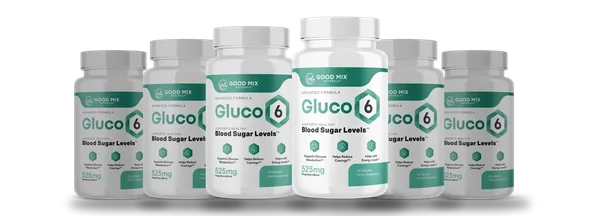
Order Gluco6 from the official website
Three packs, one-time payment, and 60 days to change your mind.
$39 to $69 a bottle · 60 days to change your mind, bottles back even if empty
Order Gluco6 On The Official WebsiteOne-time payment, no subscription · 60-day money-back guarantee · lot GLU-26/GL-3620