Gluco6 Official Website › Gluco6 Ingredients
Gluco6 Ingredients: The Six Names on the Label
Gluco6 contains six named ingredients in one 525 mg blend.
They are Sukre, chromium, cinnamon, TeaCrine, gymnema sylvestre and green tea. The label gives the blend total, not a separate amount for each.
See the full label.
What are the six ingredients named on the Gluco6 label?
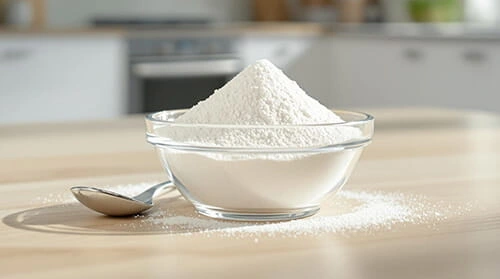
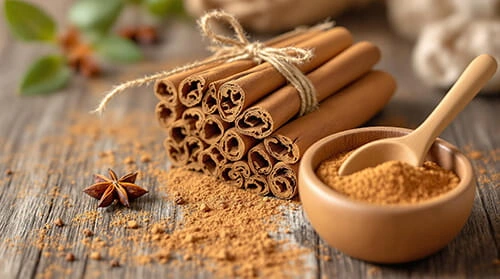
Sukre
Named on the label Amount: not printedThe seller’s own branded compound name, and the one it leads on. It is a trade name rather than a characterised ingredient: no botanical source, no chemical identity and no amount is published for it anywhere in the seller’s material or in the paperwork this desk holds.
What the seller says about it: “Supports healthy glucose absorption”, “Manipulates glucose movement out of the bloodstream”, “Facilitates weight loss” — the seller’s own wording, quoted rather than repeated as a claim of this desk’s.
The United States trademark on the name SUKRE was registered in September 2024 to Compound Solutions, Inc., and its goods clause describes acacia hydrolysate; the supplier calls the material purified l-arabinose. One peer-reviewed paper names Sukre: a 28-day oral toxicity study in rats at up to 7,200 mg/kg a day, which found no adverse effects and whose authors disclose that the trademark owner paid for the work. No human trial of Sukre exists.
Chromium
Named on the label Amount: not printedAn essential trace mineral. It is the only entry on this list with a US Adequate Intake figure behind it, which is why the missing amount matters more here than anywhere else on the label.
What the seller says about it: “Enhances insulin sensitivity”, “Supports healthy blood sugar levels”, “Helps burn fat faster” — the seller’s own wording, quoted rather than repeated as a claim of this desk’s.
This is the one name with a federal intake figure behind it. NIH’s Office of Dietary Supplements sets the Adequate Intake for adults aged 19 to 50 at 35 micrograms a day for men and 25 for women, against a Daily Value of 35. The trials used far more: Anderson 1997 gave 200 or 1,000 micrograms a day for four months, and a meta-analysis of 25 trials puts any benefit above 200, while a later NIH review calls the evidence limited.
Cinnamon
Named on the label Amount: not printedA culinary bark used as a supplement ingredient for a long time and studied for rather less of it. Which cinnamon species and which preparation are not stated.
What the seller says about it: “Traditionally used to support blood sugar balance”, “Enhances insulin sensitivity”, “Suppresses appetite” — the seller’s own wording, quoted rather than repeated as a claim of this desk’s.
The trial doses run across a fiftyfold range. Allen 2013 pooled ten trials at 120 mg to 6 g a day and reported fasting glucose about 24.6 mg/dL lower, with HbA1c unmoved. The Cochrane review took ten trials in 577 patients at a mean of 2 g a day and found the evidence insufficient either way. NCCIH adds the detail that decides how any of it reads: products frequently omit the species and the plant part.
TeaCrine
Named on the label Amount: not printedA branded form of theacrine, a compound related to caffeine. It is the entry on this label that a reader who avoids stimulants should look at hardest, and its amount is not published either.
What the seller says about it: “Supports healthy blood glucose metabolism”, “Enhances cognition, focus, mood, and mental energy”, “Boosts weight loss” — the seller’s own wording, quoted rather than repeated as a claim of this desk’s.
TeaCrine is a trade name; theacrine is the compound, a purine alkaloid related to caffeine, and its human record is about energy rather than glucose. Taylor 2016 gave 200 or 300 mg a day for eight weeks to 60 adults, and Ziegenfuss 2017 tested 200 and 400 mg a day for subjective energy and focus. A PubMed search for theacrine with a human blood-glucose outcome returns zero records.
Gymnema Sylvestre
Named on the label Amount: not printedA climbing plant from South Asia, long used for the way its leaves blunt the taste of sweetness on the tongue. Leaf or extract, and at what strength, is not stated.
What the seller says about it: “Reduces sugar cravings by blocking taste receptors”, “Supports healthy glucose levels”, “Moderates your appetite” — the seller’s own wording, quoted rather than repeated as a claim of this desk’s.
The reputation rests on one extract at one amount. Baskaran 1990 used 400 mg a day of a leaf extract called GS4 for eighteen to twenty months in 22 patients, and a 2021 meta-analysis of ten studies in 419 people reports glucose and HbA1c lower — with most of those comparisons run against each patient’s own baseline rather than against placebo.
Green Tea
Named on the label Amount: not printedThe most studied name on the list. Whether this is leaf powder or a standardised extract, and how much of it there is, are not stated.
What the seller says about it: “Improves glycemic control”, “Provides antioxidants for health and physical function benefits”, “Supports chronic metabolomics activity” — the seller’s own wording, quoted rather than repeated as a claim of this desk’s.
Zheng 2013 pooled 22 randomised trials in 1,584 adults and found fasting glucose 1.48 mg/dL lower, a difference that is statistically significant and clinically small; fasting insulin, HbA1c and HOMA-IR did not move, and the effect appeared only past twelve weeks. Green tea also carries the largest safety literature of the six, set out on the safety page.
What is a named Gluco6 list without amounts actually worth?
Six names buy checks a bare blend line cannot. Somebody who avoids stimulants can find TeaCrine, and somebody already taking chromium can see that this capsule adds more of the same mineral.
What six names cannot do is place the capsule on a research scale. Every trial quoted above has an amount attached, and this label answers with one figure covering all six.
525 mg is still a number to act on. It is the figure to hold against any other blood-sugar formula you are comparing, because most of them publish the same kind of total.
The six are also four different kinds of thing: a nutrient with a federal Daily Value, three plants with wide dose ranges, a compound studied for a different subject, and a trade name tested only in rats.
More than no list, because six names can be checked against an allergy, a medicine or a stimulant you avoid. Less than a Supplement Facts panel, because no entry can be set beside the amount a study used. The 525 mg total is the only number, and it is a ceiling for all six together.
What the research says about the ingredients Gluco6 names
The six rows below are not equally strong, and the differences are the useful part — two names carry pooled human trials in people with diabetes, and one carries a rat study.
The compound the SUKRE registration points at has been trialled in its own right, and the results split three ways. Krog-Mikkelsen 2011 gave 3 g of l-arabinose with a 75 g sucrose drink to 15 healthy men and cut the glucose peak by 11 per cent. Pasmans 2022 used 7.5 g with 50 g of sucrose and slowed glucose appearance. Halschou-Jensen 2015 folded it into a mixed breakfast and nothing moved at all. Those are trials of l-arabinose, taken by the gram beside a sugar load — and Gluco6 gives no amount for the name it prints.
| Ingredient | In Gluco6 | What the research base looks like |
|---|---|---|
| Sukre | named, amount not printed | One published study, in rats, paid for by the trade name’s owner. |
| Chromium | named, amount not printed | 25 pooled trials, a 0.55% HbA1c reduction, and an NIH review calling the same literature limited. |
| Cinnamon | named, amount not printed | Ten trials pooled twice: fasting glucose lower in one reading, too weak to settle in the other. |
| TeaCrine | named, amount not printed | Two controlled human trials, both on energy, focus and mood. |
| Gymnema Sylvestre | named, amount not printed | Ten studies in 419 people, mostly against baseline rather than a placebo arm. |
| Green Tea | named, amount not printed | 22 randomised trials, 1,584 adults. Fasting glucose 1.48 mg/dL lower, HbA1c unchanged. |
Gluco6 ingredient questions
How many ingredients are in Gluco6?
Six are named on the label: Sukre, Chromium, Cinnamon, TeaCrine, Gymnema Sylvestre, Green Tea. They sit inside one proprietary blend whose 525 mg total is the only weight the bottle gives.
How much of each ingredient is in Gluco6?
The label prints one figure for all six together, 525 mg. The split between them is not printed. That makes 525 mg a ceiling rather than a dose, and the figure to compare against any other formula you are reading.
What is Sukre?
The seller’s own branded compound name. It is a trade name rather than a characterised ingredient: no botanical source, chemical identity or amount is published for it. The trademark on the name identifies acacia hydrolysate, and the supplier describes the material as purified l-arabinose. One rat study names Sukre, and no human trial of it exists.
Sources on the Gluco6 ingredient names
- United States Patent and Trademark Office, Trademark Status and Document Retrieval. SUKRE, US Serial Number 97260422, Registration Number 7508367, registered 17 September 2024 to Compound Solutions, Inc., Carlsbad, California. Goods: "Chemical additive component for dietary aid, namely, Acacia hydrolysate, used in the manufacture of food, medical foods, beverages, nutritional and dietary supplements." https://tsdr.uspto.gov/#caseNumber=97260422&caseSearchType=US_APPLICATION&caseType=DEFAULT&searchType=statusSearch
- Dziwenka M, Emmel KV. Genotoxicity and Repeat-Dose 28-day Oral Toxicological Evaluation of Sukre, a Purified l-Arabinose From Acacia Hydrolysate. Int J Toxicol. 2026;45(2):190-197. https://pubmed.ncbi.nlm.nih.gov/41093367/
- Krog-Mikkelsen I, Hels O, Tetens I, Holst JJ, Andersen JR, Bukhave K. The effects of L-arabinose on intestinal sucrase activity: dose-response studies in vitro and in humans. Am J Clin Nutr. 2011;94(2):472-8. https://pubmed.ncbi.nlm.nih.gov/21677059/
- Pasmans K, Meex RCR, Trommelen J, Senden JMG, Vaughan EE, van Loon LJC, Blaak EE. L-arabinose co-ingestion delays glucose absorption derived from sucrose in healthy men and women: a double-blind, randomised crossover trial. Br J Nutr. 2022;128(6):1072-1081. https://pubmed.ncbi.nlm.nih.gov/34657640/
- Halschou-Jensen K, Bach Knudsen KE, Nielsen S, Bukhave K, Andersen JR. A mixed diet supplemented with L-arabinose does not alter glycaemic or insulinaemic responses in healthy human subjects. Br J Nutr. 2015;113(1):82-8. https://pubmed.ncbi.nlm.nih.gov/25400106/
- Suksomboon N, Poolsup N, Yuwanakorn A. Systematic review and meta-analysis of the efficacy and safety of chromium supplementation in diabetes. J Clin Pharm Ther. 2014;39(3):292-306. https://pubmed.ncbi.nlm.nih.gov/24635480/
- Costello RB, Dwyer JT, Bailey RL. Chromium supplements for glycemic control in type 2 diabetes: limited evidence of effectiveness. Nutr Rev. 2016;74(7):455-68. https://pubmed.ncbi.nlm.nih.gov/27261273/
- Anderson RA, Cheng N, Bryden NA, Polansky MM, Cheng N, Chi J, Feng J. Elevated intakes of supplemental chromium improve glucose and insulin variables in individuals with type 2 diabetes. Diabetes. 1997;46(11):1786-91. https://pubmed.ncbi.nlm.nih.gov/9356027/
- NIH Office of Dietary Supplements. Chromium: Fact Sheet for Health Professionals. https://ods.od.nih.gov/factsheets/Chromium-HealthProfessional/
- Allen RW, Schwartzman E, Baker WL, Coleman CI, Phung OJ. Cinnamon use in type 2 diabetes: an updated systematic review and meta-analysis. Ann Fam Med. 2013;11(5):452-9. https://pubmed.ncbi.nlm.nih.gov/24019277/
- Leach MJ, Kumar S. Cinnamon for diabetes mellitus. Cochrane Database Syst Rev. 2012;2012(9):CD007170. https://pubmed.ncbi.nlm.nih.gov/22972104/
- National Center for Complementary and Integrative Health. Cinnamon: Usefulness and Safety. https://www.nccih.nih.gov/health/cinnamon
- Taylor L, Mumford P, Roberts M, Hayward S, Mullins J, Urbina S, Wilborn C. Safety of TeaCrine, a non-habituating, naturally-occurring purine alkaloid over eight weeks of continuous use. J Int Soc Sports Nutr. 2016;13:2. https://pubmed.ncbi.nlm.nih.gov/26766930/
- Ziegenfuss TN, Habowski SM, Sandrock JE, Kedia AW, Kerksick CM, Lopez HL. A Two-Part Approach to Examine the Effects of Theacrine (TeaCrine) Supplementation on Oxygen Consumption, Hemodynamic Responses, and Subjective Measures of Cognitive and Psychometric Parameters. J Diet Suppl. 2017;14(1):9-24. https://pubmed.ncbi.nlm.nih.gov/27164220/
- Devangan S, Varghese B, Johny E, Gurram S, Adela R. The effect of Gymnema sylvestre supplementation on glycemic control in type 2 diabetes patients: A systematic review and meta-analysis. Phytother Res. 2021;35(12):6802-6812. https://pubmed.ncbi.nlm.nih.gov/34467577/
- Baskaran K, Kizar Ahamath B, Radha Shanmugasundaram K, Shanmugasundaram ER. Antidiabetic effect of a leaf extract from Gymnema sylvestre in non-insulin-dependent diabetes mellitus patients. J Ethnopharmacol. 1990;30(3):295-300. https://pubmed.ncbi.nlm.nih.gov/2259217/
- Zheng XX, Xu YL, Li SH, Hui R, Wu YJ, Huang XH. Effects of green tea catechins with or without caffeine on glycemic control in adults: a meta-analysis of randomized controlled trials. Am J Clin Nutr. 2013;97(4):750-62. https://pubmed.ncbi.nlm.nih.gov/23426037/
Who writes this Gluco6 page?
This desk publishes what the bottle says and marks the edge of it. The four claims below are the ones a sceptical reader can audit in ten minutes, which is the only reason to make them:
- The bottle is the source. The four claim lines, the six ingredient names, the 525 mg blend total and the capsule count come from the printed label and the seller’s own artwork. Prices come from the seller’s order page, read on 18 September 2026, not from a review column.
- The blend total is printed as a ceiling, not a dose. The label gives one figure for six ingredients together, so no page here splits it, ranks it or compares a single ingredient against a research dose as though it had one.
- Sources are real and linked in the sentence. Every study cited here was confirmed against its PubMed record before it was written down, and every government page was opened and checked by its title rather than assumed.
- Corrections change the date. Write to [email protected] and the review date at the foot of the page moves forward.
We earn when you buy. Gluco6formula is the USA Authorized Gluco6 Retailer named at the top of this page, and this website makes money on orders placed through it. That is exactly why the note about what a named list without amounts is worth, the three four-star reviews and the plain statement that Gluco6 is not a diabetes treatment are here: they are where our interest and yours pull apart, and you should be able to watch us choose.
Order support on +1 (302) 200-3480 handles tracking, changes, cancellations and refunds, and the sales address the supplier publishes is [email protected]. Neither is a sales line, and this website never presents them as a way to place an order: orders go through the checkout only.
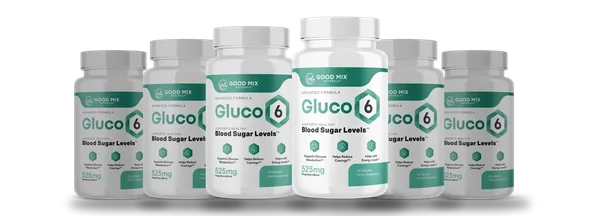
Order Gluco6 from the official website
Three packs, one-time payment, and 60 days to change your mind.
$39 to $69 a bottle · 60 days to change your mind, bottles back even if empty
Order Gluco6 On The Official WebsiteOne-time payment, no subscription · 60-day money-back guarantee · lot GLU-26/GL-3620