Gluco6 Official Website › Choosing A Blood Sugar Supplement
Choosing A Blood Sugar Supplement: An Eight-Point Checklist
Eight checks decide whether a blood sugar supplement label can be read at all: the names, the amounts, the blend total, the species, the allergens, the serving, the trial record and the guarantee. This guide explains each one and then scores the product this website sells against the same eight.
The scoring table is the point of the page, including the lines it does not pass.
The eight checks, and why each one matters
Run them in order — the first three cover the formula, the next two what else is in the capsule, and the last three the routine, the record and the money.
- Is every ingredient named? A name can be checked against an allergy, a stimulant somebody avoids or a medicine they already take. All of that works with no numbers at all.
- Is an amount printed for each one? It is the only way to set a name beside the amount a trial used. Without it, a research result and a capsule are two unrelated facts.
- Is the blend total printed? A total is a real ceiling, and plenty of blends in this category print no number at all.
- Is the species or extract ratio given? Cinnamon is several plants and gymnema is sold as leaf and as standardised extract. The word alone does not say which.
- Is there an allergen statement? A free-from seal is a claim. An allergen line is the thing that makes it checkable.
- Is the serving direction published? How many, when, and whether food matters. A routine you cannot follow is not a routine.
- Is there a published trial of the finished product? Trials of ingredients are not trials of a capsule, and almost nothing in this category has one.
- Is the guarantee written down in full? A window, a condition, an address and who pays the postage. All four, in writing, before payment.
What the trials in this category measured, and for how long
Check seven asks whether the finished product has been tested, and the answer is almost always no. What exists instead is research on single ingredients, and it is worth knowing what those studies looked at before a label borrows their reputation.
| Name | What was measured | For how long | What it found |
|---|---|---|---|
| Chromium | HbA1c and fasting glucose | Four months in the trial the dose figures come from; the pooled review covers 25 trials | A pooled HbA1c fall of 0.55%, and in a second review fasting glucose reached the treatment goal in 5 trials out of 20 |
| Cinnamon | Fasting glucose and lipids | Four to eighteen weeks | Fasting glucose down 24.59 mg/dL across 10 trials; HbA1c did not move, and the Cochrane review calls the evidence insufficient |
| Gymnema sylvestre | Fasting glucose, post-meal glucose, HbA1c | Eighteen to twenty months in the anchor trial | Reductions across 10 studies in 419 patients, against baseline rather than placebo, with heterogeneity running to 99% |
| Green tea | Fasting glucose, insulin, HbA1c, HOMA-IR | Twelve weeks or longer | Fasting glucose down 1.48 mg/dL across 22 trials. Insulin, HbA1c and HOMA-IR did not move |
| Theacrine | Energy, focus, mood and the safety panel | Seven days to eight weeks | No blood-glucose outcome was measured, because no human blood-glucose trial of it exists |
From Suksomboon 2014, Costello 2016, Allen 2013, the Cochrane review, Devangan 2021, Zheng 2013 and Taylor 2016. Green tea extract carries a safety record as well as an efficacy one: the US Pharmacopeia review reports liver injury at EGCG intakes from 140 mg a day upward and its monograph caution is to take it with food.
Three things fall out of that table. The timescales are months rather than days — a product judged in week one has not been judged. The effect sizes are small enough to be worth printing as numbers rather than as adjectives. And the reviews themselves are cautious: the strongest of them describes the evidence as limited, and one calls it insufficient.
A label sounding more certain than its own research is telling you about the seller rather than the capsule. NCCIH lists chromium and cinnamon as weak evidence of possible benefit.
The check that is not optional
One group has to run a ninth check before the other eight are worth anything. If you take insulin, or a sulfonylurea such as glipizide, your prescription is already lowering blood glucose on purpose. NIDDK names those drug classes as the ones that cause hypoglycaemia, and puts the number to act on at 70 mg/dL.
Several names on this shelf have been studied for lowering glucose too, and the evidence that they can is the evidence a seller quotes as a benefit. NIH’s Office of Dietary Supplements states the problem in its own words for chromium, warning of an additive effect with antidiabetes medicines and an increased risk of hypoglycaemia with insulin. It is not theoretical: in the gymnema trial that made that ingredient’s name, 400 mg a day of a leaf extract was added on top of patients’ oral drugs and their drug doses had to be reduced, with five of the twenty-two coming off medication entirely.
Seen from a buyer’s side, that is the same event as a supplement working — and the conversation to have is with whoever set your dose, before the first capsule rather than after the first odd afternoon.
How Gluco6 scores against the same eight
| Check | Gluco6 | What that means for a buyer |
|---|---|---|
| Is every ingredient named? | Yes, six of them | Pass. Six names are printed and a reader can act on all six before buying. |
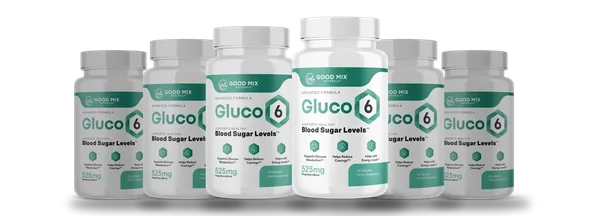
| Is an amount printed for each one? | No. One blend total only | Fail. This is the check the label misses, and it is the one that matters most. No ingredient here can be placed on the range its own trials used. |
| Is the blend total printed? | Yes, 525 mg | Pass. It fixes the scale, and it is the figure to carry into any comparison. |
| Is the species or extract ratio given? | No | Fail. Two of the six names cannot be matched to the preparation their trials used. |
| Is there an allergen statement? | No | Fail. The seller states gluten-free, dairy-free and soy-free, and the artwork carries no contains line to read those against. |
| Is the serving direction published? | Yes, by the seller | Pass. One capsule in the morning, before breakfast, with a glass of water. |
| Is there a published trial of the finished product? | No | Fail. The research on these six names is research on the names, and nothing published has tested the combination. |
| Is the guarantee written down in full? | Yes, 60 days | Pass. Sixty days, bottles back even if empty, refund less shipping and handling, return postage on the buyer. |
Scored from the printed label and the seller's own order page on 18 September 2026.
Four passes and four fails, and the fails are not evenly weighted. Three of them, the per-ingredient amounts, the species and the allergen line, would be solved by one document: a Supplement Facts panel. The fourth, a trial of the finished product, is a fail almost every competitor on the same shelf would also collect.
What Gluco6 passes is worth naming too, because it is more than a lot of this category manages. Six ingredients are named rather than hidden behind the phrase “proprietary blend” alone, a real total is printed, the serving is unambiguous and the guarantee is written down with its deduction in the open. A buyer can do real work with that before paying.
This desk sells the product it has just failed on half the list, which is why the fails are in the table rather than a footnote and why the label page prints the same figures.
When the checklist says buy nothing
Leave the category alone if
- You take insulin, a sulfonylurea or a meglitinide and nobody who prescribes for you has seen the bottle.
- You are pregnant, nursing or under eighteen.
- A recent test came back in the prediabetes or diabetes range and has not been followed up.
- You would take it instead of a prescribed medicine rather than alongside one. Never do that.
Spend the money elsewhere if
- You have not changed anything about food, sleep or movement yet, which is where the strongest evidence in this whole subject sits.
- It would be the fourth product you are taking for the same reason.
- You are buying it instead of booking the repeat test.
- The window is too short to judge it in. Months, not days, is what the research needed.
Neither list is an argument against supplements. They are the cases where a checklist has done its job by pointing somewhere other than the checkout.
What a checklist cannot settle
Eight checks measure a label. They do not measure a capsule, and the difference is worth being honest about. A product could pass all eight and do nothing, and one could fail three and suit somebody perfectly well.
None of the eight asks what the bottle claims, because that line is drawn by rule rather than by judgement. A supplement may describe an effect on normal body function and must carry the disclaimer that goes with it; a product that claims to treat or prevent a disease is regulated as a drug instead.
What it does is separate the questions that can be answered before paying, which is most of them, from the one that cannot be answered for a couple of months.
So run it, write the answers down, and let the two honest numbers decide — the cost per day, and the length of the window you have to change your mind in. The label guide covers the first half of the list in detail, and the pricing page covers the second. Last reviewed September 18, 2026.
Sources cited in this guide
- Electronic Code of Federal Regulations. 21 CFR 101.93 - Certain types of statements for dietary supplements. https://www.ecfr.gov/current/title-21/chapter-I/subchapter-B/part-101/subpart-F/section-101.93
- U.S. Food and Drug Administration. Structure/Function Claims. https://www.fda.gov/food/nutrition-food-labeling-and-critical-foods/structurefunction-claims
- Suksomboon N, Poolsup N, Yuwanakorn A. Systematic review and meta-analysis of the efficacy and safety of chromium supplementation in diabetes. J Clin Pharm Ther. 2014;39(3):292-306. https://pubmed.ncbi.nlm.nih.gov/24635480/
- Costello RB, Dwyer JT, Bailey RL. Chromium supplements for glycemic control in type 2 diabetes: limited evidence of effectiveness. Nutr Rev. 2016;74(7):455-68. https://pubmed.ncbi.nlm.nih.gov/27261273/
- NIH Office of Dietary Supplements. Chromium: Fact Sheet for Health Professionals. https://ods.od.nih.gov/factsheets/Chromium-HealthProfessional/
- Allen RW, Schwartzman E, Baker WL, Coleman CI, Phung OJ. Cinnamon use in type 2 diabetes: an updated systematic review and meta-analysis. Ann Fam Med. 2013;11(5):452-9. https://pubmed.ncbi.nlm.nih.gov/24019277/
- Leach MJ, Kumar S. Cinnamon for diabetes mellitus. Cochrane Database Syst Rev. 2012;2012(9):CD007170. https://pubmed.ncbi.nlm.nih.gov/22972104/
- Devangan S, Varghese B, Johny E, Gurram S, Adela R. The effect of Gymnema sylvestre supplementation on glycemic control in type 2 diabetes patients: A systematic review and meta-analysis. Phytother Res. 2021;35(12):6802-6812. https://pubmed.ncbi.nlm.nih.gov/34467577/
- Baskaran K, Kizar Ahamath B, Radha Shanmugasundaram K, Shanmugasundaram ER. Antidiabetic effect of a leaf extract from Gymnema sylvestre in non-insulin-dependent diabetes mellitus patients. J Ethnopharmacol. 1990;30(3):295-300. https://pubmed.ncbi.nlm.nih.gov/2259217/
- Zheng XX, Xu YL, Li SH, Hui R, Wu YJ, Huang XH. Effects of green tea catechins with or without caffeine on glycemic control in adults: a meta-analysis of randomized controlled trials. Am J Clin Nutr. 2013;97(4):750-62. https://pubmed.ncbi.nlm.nih.gov/23426037/
- Oketch-Rabah HA, Roe AL, Rider CV, et al. United States Pharmacopeia (USP) comprehensive review of the hepatotoxicity of green tea extracts. Toxicol Rep. 2020;7:386-402. https://pubmed.ncbi.nlm.nih.gov/32140423/
- Taylor L, Mumford P, Roberts M, Hayward S, Mullins J, Urbina S, Wilborn C. Safety of TeaCrine, a non-habituating, naturally-occurring purine alkaloid over eight weeks of continuous use. J Int Soc Sports Nutr. 2016;13:2. https://pubmed.ncbi.nlm.nih.gov/26766930/
- National Institute of Diabetes and Digestive and Kidney Diseases. Low Blood Glucose (Hypoglycemia). https://www.niddk.nih.gov/health-information/diabetes/overview/preventing-problems/low-blood-glucose-hypoglycemia
- National Center for Complementary and Integrative Health. Diabetes and Dietary Supplements: What You Need To Know. https://www.nccih.nih.gov/health/diabetes-and-dietary-supplements-what-you-need-to-know
Who writes these guides?
This desk publishes what the bottle says and marks the edge of it. The four claims below are the ones a sceptical reader can audit in ten minutes, which is the only reason to make them:
- The bottle is the source. The four claim lines, the six ingredient names, the 525 mg blend total and the capsule count come from the printed label and the seller’s own artwork. Prices come from the seller’s order page, read on 18 September 2026, not from a review column.
- The blend total is printed as a ceiling, not a dose. The label gives one figure for six ingredients together, so no page here splits it, ranks it or compares a single ingredient against a research dose as though it had one.
- Sources are real and linked in the sentence. Every study cited here was confirmed against its PubMed record before it was written down, and every government page was opened and checked by its title rather than assumed.
- Corrections change the date. Write to [email protected] and the review date at the foot of the page moves forward.
We earn when you buy. Gluco6formula is the USA Authorized Gluco6 Retailer named at the top of this page, and this website makes money on orders placed through it. That is exactly why the note about what a named list without amounts is worth, the three four-star reviews and the plain statement that Gluco6 is not a diabetes treatment are here: they are where our interest and yours pull apart, and you should be able to watch us choose.
Order support on +1 (302) 200-3480 handles tracking, changes, cancellations and refunds, and the sales address the supplier publishes is [email protected]. Neither is a sales line, and this website never presents them as a way to place an order: orders go through the checkout only.
Order Gluco6 from the official website
Three packs, one-time payment, and 60 days to change your mind.
$39 to $69 a bottle · 60 days to change your mind, bottles back even if empty
Order Gluco6 On The Official WebsiteOne-time payment, no subscription · 60-day money-back guarantee · lot GLU-26/GL-3620