Gluco6 Official Website › Blood Sugar Supplement Guide
How To Read A Blood Sugar Supplement Label
A supplement label has to carry a serving size, a servings count and an ingredient list. It does not have to break a proprietary blend into its parts. That single allowance is why two products with identical ingredient lists can be completely different products, and it is the thing worth learning to read.
This guide covers the panel, the blend rule, what a claim line may say and the figures that make a claim checkable.
What a Supplement Facts panel must carry
The panel is the regulated surface on a supplement and is titled with those two words. 21 CFR 101.36 sets what goes in it: the serving size, the number of servings in the container, each dietary ingredient by name, and, for anything without an established Daily Value, the quantitative amount by weight in one serving.
Underneath the panel sits a separate line for everything that is not a dietary ingredient: the capsule shell, the filler, the flow agent, the colour. That line is where a vegetarian or somebody avoiding a particular excipient finds an answer, and it is easy to miss because it sits outside the box.
Everything else is the front of a package rather than a panel. Claim lines, seals and ingredient names arranged as a feature list can be entirely accurate while telling a reader nothing measurable.
What a proprietary blend total means
The same rule that requires an amount for every ingredient makes one allowance. Ingredients may be grouped under a name the maker chooses and declared with a single total weight instead of an amount for each name inside it. That is a proprietary blend — legal, common, and older than most of the products using it.
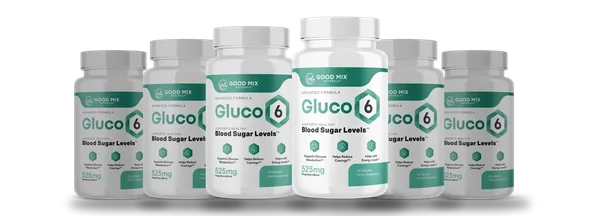
What it protects is a formula. What it costs is every comparison a reader would want to make. Gluco6 is a clean example: six names, one figure, 525 mg for the lot. That figure is real and useful, and it does less work than it looks like it does.
A blend total is an upper bound for every ingredient in it at once. It tells you the most any single name can be. It tells you nothing about the least, and it cannot be compared with a research dose.
What descending order tells you, and what it does not
The blend allowance comes with one condition, and it is the only other clue a blend line carries: the names inside it are listed heaviest first. From that, exactly two things follow and no more. The first name is at least the total divided by the number of names, and the last name is at most the same figure. With 525 mg across six names, that is 87.5 mg at either end.
It is also how to tell a panel order from a marketing order. Chromium is dosed in micrograms: the Daily Value is 35 mcg and the trial the dose figures come from used 200 and 1,000 mcg a day, a milligram at the top. A name near the head of a descending list is one of the heaviest things in the blend, and nobody formulates chromium at that weight — so a list on the front of a bottle is a list, and the ranking is something only the panel carries.
This desk has not seen a Supplement Facts panel for Gluco6, so the order its six names appear in cannot be read as a ranking.
The most this could be
The honest sentence about a blend is always the same shape — this is the most it could be. An even split needs no assumption, so it is the division worth doing: 525 mg over six names is 87.5 mg each. That figure is not a claim about any bottle; it is the scale the names have to fit inside.
| Name | What the research used | How that sits against 87.5 mg |
|---|---|---|
| Sukre | No human trial exists. The trademark on the name identifies an acacia hydrolysate, and the supplier describes the ingredient as purified l-arabinose, which was studied at 3 g and 7.5 g taken with a sugar load. | Those amounts are six to fourteen times the whole 525 mg blend. Gluco6 does not say its Sukre is l-arabinose. |
| Chromium | 200 to 1,000 micrograms a day in the trials. The Daily Value is 35 micrograms. | 0.2 mg to 1 mg. An even sixth of the blend would be about ninety times the top of that. |
| Cinnamon | 120 mg to 6 g a day for four to eighteen weeks. | 87.5 mg sits below the lowest amount any of those trials used. |
| TeaCrine | 200 mg to 400 mg a day of theacrine, studied for energy, focus and mood. | Two fifths to three quarters of the whole blend. |
| Gymnema sylvestre | 400 mg a day of the GS4 leaf extract in the trial that made its name. | That single amount would use more than three quarters of the total. |
| Green tea | Catechin trials run twelve weeks or longer, and no EGCG figure is printed here. | The one name where the amount matters for safety as much as for effect. |
Trial amounts from Krog-Mikkelsen 2011, Pasmans 2022, the SUKRE trademark registration, Anderson 1997, Allen 2013, Ziegenfuss 2017 and Baskaran 1990. None of them studied a finished capsule.
Read down the third column and the point arrives on its own. Two of these names at the amounts their own trials used would exhaust the blend between them, so they cannot both be at a studied amount at once. That is arithmetic, not an accusation.
Where the arithmetic stops matters as much. It cannot say which name got the space, and anybody who turns “the most this could be” into “this contains” has left the label behind.
What a label is allowed to claim
A supplement may describe an effect on the body’s normal working. Supports healthy blood sugar levels, supports glucose metabolism, helps reduce cravings: those are structure and function claims, and the FDA allows them on condition that the label carries the disclaimer saying the product is not intended to diagnose, treat, cure or prevent any disease, “because only a drug can legally make such a claim”.
Lowers blood sugar, reverses prediabetes, manages diabetes: those are disease claims, and the rule is blunt about the consequence. A product bearing one is regulated as a drug. That is not a matter of tone but a difference between two categories of product.
Advertising is held to a second standard on top of that one. The FTC asks for competent and reliable scientific evidence behind a health claim, generally randomised controlled human trials. So a bottle can sit neatly inside the rules while the page selling it does not, and NCCIH notes that the FDA has warned about illegally marketed products claiming to prevent, treat or cure diabetes.
Which figures make a claim checkable
| If the label prints | You can check | You cannot check |
|---|---|---|
| A named ingredient list | Allergens, stimulants, interactions with a medicine | Whether the amount matches any study |
| A blend total only | The ceiling for every name at once | The share any one name takes |
| A full panel with amounts | Each name against the trial dose | Whether the batch matches the panel, without a certificate |
The first row is the one people undervalue. A named list with no numbers is worth a great deal to anyone avoiding a stimulant, managing an allergy or taking a medicine that interacts — those questions turn on whether something is present, not on how much of it there is.
The second row is where most of this category sits. A total gives a reader a real ceiling and makes two products with the same names comparable at the level of scale. What it cannot do is put any single name on the same axis as a trial. The third row is the standard, and even it has a limit: a panel says what was meant to go in, and only a certificate of analysis from a named laboratory speaks to what actually did.
What a label that solved this would print
None of this needs a new rule. Every row below is already printed by some products on the same shelf.
| Row | What it would print | What that lets a reader do |
|---|---|---|
| Serving size | One capsule, and thirty servings per container | Turns a bottle count into a number of days |
| Every named ingredient | The amount by weight in one serving | The only way to set a name beside the amount a trial used |
| Botanicals | The species and the plant part, such as cassia bark | Cinnamon is not one plant, and the species changes the safety note |
| Extracts | The ratio or the standardisation, such as 10:1 | Two labels at the same milligram figure can differ tenfold |
| A blend, if one is used | The total and the amount of each name inside it | Printing both loses nothing that a total alone protects |
| Other ingredients | Capsule shell, fillers and flow agents | Decides whether a vegetarian or a coeliac can take it |
| Allergens | A plain contains line | Makes a free-from seal something a reader can check |
| Directions and cautions | How many, when, with or without food, and who should leave it alone | The routine and the safety note in the same place |
A blend total and a per-ingredient amount are not alternatives. Labels that print both are the easiest in the category to compare.
Set that against the bottle in front of you and the gap is usually one or two rows. For Gluco6 it is the second, third and seventh. The checklist guide scores that one line by line.
Sources cited in this guide
- Electronic Code of Federal Regulations. 21 CFR 101.36 - Nutrition labeling of dietary supplements. https://www.ecfr.gov/current/title-21/chapter-I/subchapter-B/part-101/subpart-C/section-101.36
- Electronic Code of Federal Regulations. 21 CFR 101.93 - Certain types of statements for dietary supplements. https://www.ecfr.gov/current/title-21/chapter-I/subchapter-B/part-101/subpart-F/section-101.93
- U.S. Food and Drug Administration. Structure/Function Claims. https://www.fda.gov/food/nutrition-food-labeling-and-critical-foods/structurefunction-claims
- Federal Trade Commission. Health Products Compliance Guidance. https://www.ftc.gov/business-guidance/resources/health-products-compliance-guidance
- National Center for Complementary and Integrative Health. Diabetes and Dietary Supplements: What You Need To Know. https://www.nccih.nih.gov/health/diabetes-and-dietary-supplements-what-you-need-to-know
- United States Patent and Trademark Office, Trademark Status and Document Retrieval. SUKRE, US Serial Number 97260422, Registration Number 7508367, registered 17 September 2024 to Compound Solutions, Inc., Carlsbad, California. Goods: "Chemical additive component for dietary aid, namely, Acacia hydrolysate, used in the manufacture of food, medical foods, beverages, nutritional and dietary supplements." https://tsdr.uspto.gov/#caseNumber=97260422&caseSearchType=US_APPLICATION&caseType=DEFAULT&searchType=statusSearch
- Krog-Mikkelsen I, Hels O, Tetens I, Holst JJ, Andersen JR, Bukhave K. The effects of L-arabinose on intestinal sucrase activity: dose-response studies in vitro and in humans. Am J Clin Nutr. 2011;94(2):472-8. https://pubmed.ncbi.nlm.nih.gov/21677059/
- Pasmans K, Meex RCR, Trommelen J, Senden JMG, Vaughan EE, van Loon LJC, Blaak EE. L-arabinose co-ingestion delays glucose absorption derived from sucrose in healthy men and women: a double-blind, randomised crossover trial. Br J Nutr. 2022;128(6):1072-1081. https://pubmed.ncbi.nlm.nih.gov/34657640/
- NIH Office of Dietary Supplements. Chromium: Fact Sheet for Health Professionals. https://ods.od.nih.gov/factsheets/Chromium-HealthProfessional/
- Anderson RA, Cheng N, Bryden NA, Polansky MM, Cheng N, Chi J, Feng J. Elevated intakes of supplemental chromium improve glucose and insulin variables in individuals with type 2 diabetes. Diabetes. 1997;46(11):1786-91. https://pubmed.ncbi.nlm.nih.gov/9356027/
- Allen RW, Schwartzman E, Baker WL, Coleman CI, Phung OJ. Cinnamon use in type 2 diabetes: an updated systematic review and meta-analysis. Ann Fam Med. 2013;11(5):452-9. https://pubmed.ncbi.nlm.nih.gov/24019277/
- Ziegenfuss TN, Habowski SM, Sandrock JE, Kedia AW, Kerksick CM, Lopez HL. A Two-Part Approach to Examine the Effects of Theacrine (TeaCrine) Supplementation on Oxygen Consumption, Hemodynamic Responses, and Subjective Measures of Cognitive and Psychometric Parameters. J Diet Suppl. 2017;14(1):9-24. https://pubmed.ncbi.nlm.nih.gov/27164220/
- Baskaran K, Kizar Ahamath B, Radha Shanmugasundaram K, Shanmugasundaram ER. Antidiabetic effect of a leaf extract from Gymnema sylvestre in non-insulin-dependent diabetes mellitus patients. J Ethnopharmacol. 1990;30(3):295-300. https://pubmed.ncbi.nlm.nih.gov/2259217/
Who writes these guides?
This desk publishes what the bottle says and marks the edge of it. The four claims below are the ones a sceptical reader can audit in ten minutes, which is the only reason to make them:
- The bottle is the source. The four claim lines, the six ingredient names, the 525 mg blend total and the capsule count come from the printed label and the seller’s own artwork. Prices come from the seller’s order page, read on 18 September 2026, not from a review column.
- The blend total is printed as a ceiling, not a dose. The label gives one figure for six ingredients together, so no page here splits it, ranks it or compares a single ingredient against a research dose as though it had one.
- Sources are real and linked in the sentence. Every study cited here was confirmed against its PubMed record before it was written down, and every government page was opened and checked by its title rather than assumed.
- Corrections change the date. Write to [email protected] and the review date at the foot of the page moves forward.
We earn when you buy. Gluco6formula is the USA Authorized Gluco6 Retailer named at the top of this page, and this website makes money on orders placed through it. That is exactly why the note about what a named list without amounts is worth, the three four-star reviews and the plain statement that Gluco6 is not a diabetes treatment are here: they are where our interest and yours pull apart, and you should be able to watch us choose.
Order support on +1 (302) 200-3480 handles tracking, changes, cancellations and refunds, and the sales address the supplier publishes is [email protected]. Neither is a sales line, and this website never presents them as a way to place an order: orders go through the checkout only.
Order Gluco6 from the official website
Three packs, one-time payment, and 60 days to change your mind.
$39 to $69 a bottle · 60 days to change your mind, bottles back even if empty
Order Gluco6 On The Official WebsiteOne-time payment, no subscription · 60-day money-back guarantee · lot GLU-26/GL-3620