Gluco6 Official Website › Journal › Six names, no amounts
Six Names, No Amounts: What A Label List Is Worth
Six names, one blend total and no split between them. What that settles for a buyer, what it leaves open, and why it still beats a bottle that names nothing.
- Six ingredients are named and one number sits beside them: a 525 mg blend total. It is a ceiling for all six together.
- A named list beats no list. It settles an allergy, a stimulant and a medication question in about a minute.
- It falls short of a Supplement Facts panel. No entry carries an amount, so none can be set beside the amount a trial used.
- Sukre has the least behind it. It is a registered trade name with no published human trial on any outcome.
Gluco6 prints six ingredient names and one number beside them: a 525 mg proprietary blend total. That total is a ceiling, so no single ingredient can be more than 525 mg, and the label does not split it further. The six names are enough to check an allergy, a stimulant or a medicine. They are not enough to set any one of them beside the amount a trial used.
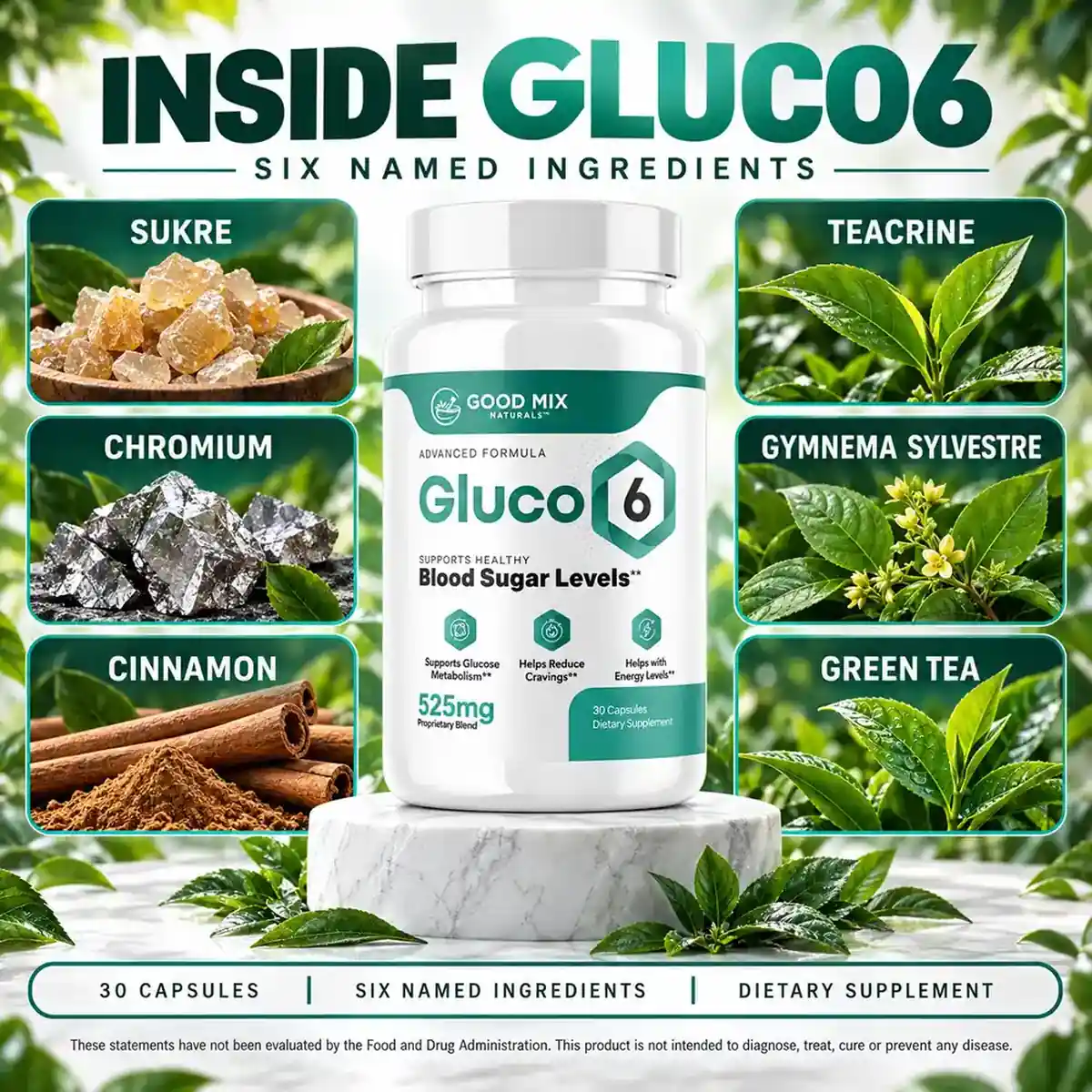
What six names settle before you buy
Six names is a long way from nothing. An ingredient list answers four practical questions in about a minute — and a bottle printing the words proprietary blend with no names answers none of them.
- Avoidance. Green tea, cinnamon and gymnema sylvestre are on the list by name, so anyone who reacts to one of them can decide before ordering rather than after.
- Stimulants. TeaCrine is a branded form of theacrine, a purine alkaloid related to caffeine. Anyone avoiding stimulants can see the entry and act on it, which is exactly the value of a name. A separate article sets it against the seller’s own No Stimulants line.
- Medicines. Chromium, cinnamon, gymnema and green tea have all been studied for lowering blood glucose. If you already take something that does that, the list is what tells you to open the conversation, and the safety page names the interaction.
- Comparison. Six names and a total give you something to hold against the next bottle. A blend with no names gives you nothing to compare.
What a name does not settle
A name says an ingredient is in the capsule. It does not say whether it is there at a level any trial has used, and that is the check most buyers actually want.
Why 525 mg is a ceiling and not a dose
The front of the bottle prints one number for the formula: a 525 mg proprietary blend. Read it as a ceiling. All six ingredients together weigh 525 mg in a serving, so no single one can be more than that — and most are a good deal less. A split is what turns a ceiling into a dose, and the label prints none.
There is one further clue on a blend like this. Under 21 CFR 101.36, a proprietary blend is declared by its total weight with the ingredients inside it listed in order of predominance by weight. If the printed panel follows that rule, the first name carries the largest share and the last carries the smallest. Sukre is printed first and green tea last.
That is an ordering, not an amount. It cannot say whether the largest share is 400 mg or 100 mg, and this desk holds the front artwork rather than the printed panel.
| What the label prints | What it settles | What it leaves open |
|---|---|---|
| Six ingredient names | Allergens, stimulants, medication questions | How much of each |
| One 525 mg blend total | The ceiling for all six at once | The share any one name takes |
| The order the six are printed in | Which name is likely the largest share | How large that share is |
| One capsule a day, 30 to a bottle | The routine, the month, and the cost per day | Nothing: these lines are complete |
Two of the four lines are complete as printed. The two that are not are the two that would let you compare this capsule with a trial, which is why the label page leaves them as printed.
Sukre, and the least-documented name on the list
Sukre is the name the seller leads with and the one a buyer can research least. Not a botanical, not a nutrient — and here is the whole of what is genuinely published about it.
SUKRE is a live United States trademark, registration 7508367, registered in September 2024 to Compound Solutions, Inc. of Carlsbad, California. The registration record describes the goods it covers as a “chemical additive component for dietary aid, namely, Acacia hydrolysate”, and it is the only primary document that says what the name covers.
The one published study, and what it measured
Exactly one peer-reviewed paper names Sukre. Dziwenka and Emmel, 2026 report three genotoxicity screens and a 28-day oral toxicity study in Wistar rats at up to 7,200 mg per kilogram of body weight a day, finding no genotoxicity and no adverse effects at the highest dose tested.
Read what that is — a safety paper, in rats, over 28 days, measuring nothing about blood sugar in anybody. The authors also disclose that the company that owns the trademark paid for the work. Both halves belong in the same sentence.
There is no human trial of Sukre. Not on blood glucose, not on anything.
Why the l-arabinose trials are not trials of this capsule
The ingredient supplier describes Sukre as purified l-arabinose from hydrolysed acacia, which is why l-arabinose is the compound worth explaining. In a 2011 dose-response study, 3 g of l-arabinose taken as 4% of a 75 g sucrose drink lowered the glucose peak by 11% and insulin exposure by 23% in 15 healthy men, by inhibiting sucrase in the gut. In a 2015 trial, l-arabinose at 5% and 10% by weight of a mixed breakfast changed neither the glucose nor the insulin response. The second result is the half marketing pages leave out.
Three things keep that research at arm’s length from this bottle. Those trials used grams with a sugar load, not a capsule before breakfast. Gluco6 does not say that its Sukre is l-arabinose. And it publishes no amount.
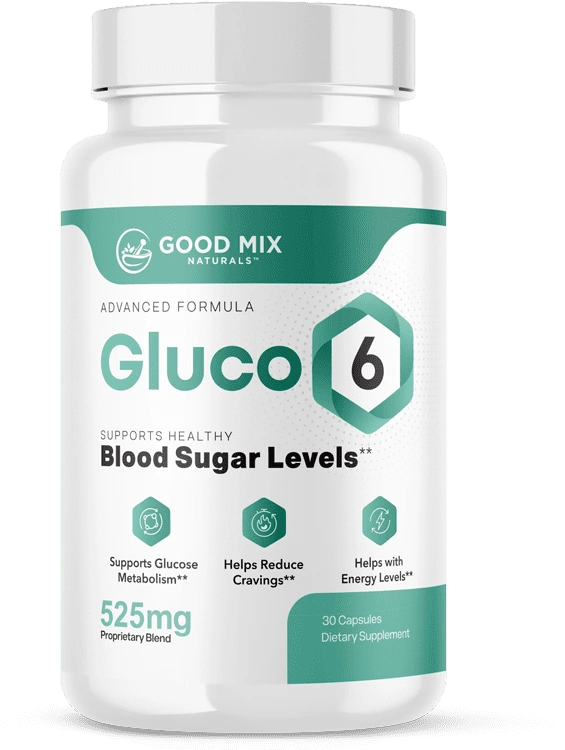
Order Gluco6 from the official website
Three packs, a one-time payment, and 60 days to change your mind. The bottles go back even if they are empty, less shipping and handling.
$39 to $69 a bottle · 60 days to change your mind, bottles back even if empty
Order Gluco6What a Supplement Facts panel would add
A Supplement Facts panel is a required table rather than a marketing device. 21 CFR 101.36 sets what has to be in it, including the quantitative amount by weight per serving of every dietary ingredient with no Daily Value. A proprietary blend is the one place the rule lets a manufacturer print a single total instead of a column of numbers, so the difference between this label and a full panel is one line per ingredient.
| Ingredient | What the research used | What this label publishes |
|---|---|---|
| Sukre | No human trial exists. l-arabinose, the compound the trademark points to, was studied at 3 g to 7.5 g with a sugar load | Named. No amount. |
| Chromium | 200 to 1,000 mcg a day; the Daily Value is 35 mcg | Named. No amount. |
| Cinnamon | 120 mg to 6 g a day, mean 2 g, for 4 to 18 weeks | Named. No amount, and no species. |
| TeaCrine | 200 to 400 mg a day of theacrine, for energy and focus | Named. No amount. |
| Gymnema sylvestre | 400 mg a day of the GS4 leaf extract | Named. No amount. |
| Green tea | Catechin trials run 12 weeks or longer | Named. No amount, and no EGCG figure. |
The middle column is what published trials and NIH fact sheets used, sourced one by one on the ingredients page. A proprietary blend is legal and common; what it costs a buyer is the ability to read across those two columns.
Four things the list still cannot tell you
- Which cinnamon is in the capsule. Cassia and Ceylon are different barks with different coumarin content, and the label prints the one word.
- Which extract, at what strength. Gymnema and green tea are sold both as leaf powder and as standardised extracts, and the two are not interchangeable at the same weight.
- What the capsule shell is made of. The seal row carries a vegetarian mark and the shell material itself is not described.
- What the allergen line says. The seller states gluten-free, dairy-free and soy-free, and the artwork carries no printed allergen statement to check them against.
Those four are why the FAQ answers “what is in it” with six names and a total rather than a paragraph.
How to use a named list when you compare bottles
- ›Count the names against the total. Six names inside 525 mg is a different proposition from three names inside 525 mg.
- ›Find the stimulant. Look up any name you do not recognise. A branded name is frequently a compound with an ordinary name behind it.
- ›Check the order. If the panel follows the labelling rule, the first name is the largest share. A ranking is not a number and it beats nothing.
- ›Ask what a serving is. A two-capsule serving halves every per-capsule figure you thought you had.
The label checklist runs those four out in full, and works on a competitor’s bottle as readily as on this one.
Where this label sits between the two
Gluco6 sits closer to the panel end than much of the category — and it does not reach it. Six names plus a 525 mg ceiling is enough to avoid an ingredient, spot the stimulant, start a conversation with a prescriber and compare one bottle with another. It is not enough to say whether any ingredient is present at a level a trial has used.
The FTC’s guidance on health products asks for competent and reliable scientific evidence behind a health claim, and adds that a claim about the level of support has to be true as well. Six names and a total support the four claims on the front of the bottle and no more, which is where this desk writes.
For the rest, how it works covers what a daily capsule can and cannot do, and the pricing page explains why three bottles rather than six is what this desk suggests first.
A note, because this is a blood sugar article. Gluco6 is a dietary supplement for healthy adults aged 18 and over. It does not treat, prevent or manage diabetes or prediabetes, and it is not a substitute for prescribed medicine. If you take insulin, a sulfonylurea such as glipizide or glimepiride, or a meglitinide such as repaglinide, those medicines already lower blood glucose, and NIDDK names them as the drugs that cause hypoglycaemia. Four of the six names on this label have been studied for the same effect and the label prints no amount for any of them, so nobody can tell you how much of it a capsule carries. Take the bottle to the clinician who set your dose before the first capsule, and treat blood glucose at or below 70 mg/dL as something to act on rather than watch.
Sources cited in this article
- Electronic Code of Federal Regulations. 21 CFR 101.36 - Nutrition labeling of dietary supplements. https://www.ecfr.gov/current/title-21/chapter-I/subchapter-B/part-101/subpart-C/section-101.36
- United States Patent and Trademark Office, Trademark Status and Document Retrieval. SUKRE, US Serial Number 97260422, Registration Number 7508367, registered 17 September 2024 to Compound Solutions, Inc., Carlsbad, California. Goods: "Chemical additive component for dietary aid, namely, Acacia hydrolysate, used in the manufacture of food, medical foods, beverages, nutritional and dietary supplements." https://tsdr.uspto.gov/#caseNumber=97260422&caseSearchType=US_APPLICATION&caseType=DEFAULT&searchType=statusSearch
- Dziwenka M, Emmel KV. Genotoxicity and Repeat-Dose 28-day Oral Toxicological Evaluation of Sukre, a Purified l-Arabinose From Acacia Hydrolysate. Int J Toxicol. 2026;45(2):190-197. https://pubmed.ncbi.nlm.nih.gov/41093367/
- Krog-Mikkelsen I, Hels O, Tetens I, Holst JJ, Andersen JR, Bukhave K. The effects of L-arabinose on intestinal sucrase activity: dose-response studies in vitro and in humans. Am J Clin Nutr. 2011;94(2):472-8. https://pubmed.ncbi.nlm.nih.gov/21677059/
- Halschou-Jensen K, Bach Knudsen KE, Nielsen S, Bukhave K, Andersen JR. A mixed diet supplemented with L-arabinose does not alter glycaemic or insulinaemic responses in healthy human subjects. Br J Nutr. 2015;113(1):82-8. https://pubmed.ncbi.nlm.nih.gov/25400106/
- Federal Trade Commission. Health Products Compliance Guidance. https://www.ftc.gov/business-guidance/resources/health-products-compliance-guidance