Gluco6 Official Website › Journal › Is Gluco6 safe to take daily
Is Gluco6 Safe to Take Daily? What the Label and Sources Say
One capsule a day is easy to start. Whether it is right for you depends on your health, your medicines and what is on the label. Here is a careful read.
The seller’s direction is one capsule a day, and the seller states no side effects have been reported. That is not a safety guarantee. No amount is published for any ingredient. It is meant for healthy adults 18 and over, not for people who are pregnant or nursing, and medicine users should ask first.
- Direction: one capsule each morning before breakfast, with a glass of water.
- Never more than the label states unless a clinician tells you to.
- Not for: anyone under 18, pregnant or nursing.
- Ask first if you take: insulin, a sulfonylurea or a meglitinide.
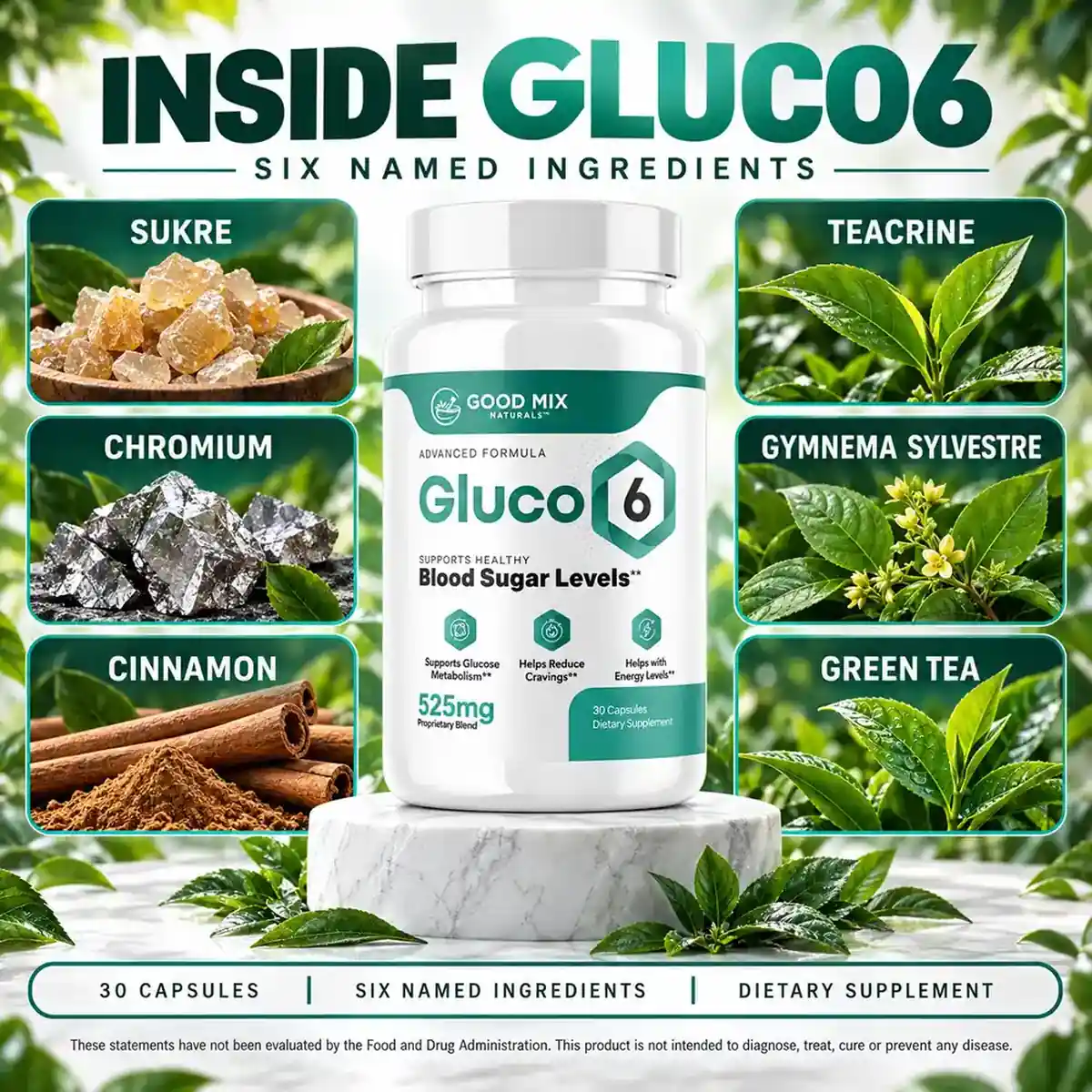
- Names with cautions: green tea extract, chromium, cinnamon and TeaCrine.
- Amounts of each ingredient: not published, so no safe or unsafe figure can be checked.
What is the daily direction, and is it a safety limit?
The seller’s own direction is one capsule in the morning, before breakfast, with a glass of water. A bottle holds 30 capsules, so it covers 30 days. The advice is to follow the bottle you receive and not to take more than it states.
A direction is not a safety study. It tells you the routine the seller had in mind. It does not tell you that every reader can take the capsule every day without trouble. The seller also states that no side effects have been reported. That is a statement from the seller, and no independent safety study of the finished capsule is published.
Who should not take Gluco6?
The audience is narrow on purpose: healthy adults aged 18 and over. From the label and the seller’s audience statement, these groups should leave it alone or talk to a clinician first.
- Anyone under 18.
- Anyone who is pregnant or nursing.
- Anyone taking insulin, a sulfonylurea or a meglitinide, until the prescriber has seen the six names.
- Anyone avoiding stimulants for a medical reason, because TeaCrine is related to caffeine and no amount is printed.
- Anyone with liver or kidney disease, or a past liver injury, because of the cautions on green tea extract and chromium.
None of this is a reason to panic. It is a short list of cases where a quick call to a doctor or pharmacist is a better first step than a purchase.
What about diabetes medicine?
This is the point that matters most. Insulin and sulfonylureas lower blood glucose on their own. A glucose-lowering medicine and an ingredient that also acts on glucose can add together. Four of the six names have been studied for glucose effects: chromium, cinnamon, gymnema and green tea.
Because no amount is published for any of the four, nobody can say how large that extra effect might be. That includes this desk. The right move is to show the label to the person who set your dose before the first capsule.
Know the warning signs of low blood sugar: shakiness, sweating, confusion and a fast heartbeat. Follow your clinician’s plan, and call 911 if the person cannot swallow or does not improve. A level at or below 70 mg/dL is the point to act on for someone with diabetes.
Which of the six names carry cautions?
A named list can be read against known cautions even without amounts. These are the ones the sources raise.
| Name | Caution from the sources | What the label says |
|---|---|---|
| Green tea | Concentrated extract has a liver-safety record; one pharmacopeia review reports cases from about 140 mg a day of EGCG upward, and advises taking it with food | Green tea is named, with no amount and no EGCG figure |
| Chromium | No upper intake level has been set, but the data are limited; it can lower absorption of levothyroxine | Named, no amount |
| Cinnamon | Products often do not name the species; cassia cinnamon contains coumarin, which matters for people with liver disease | Printed as Cinnamon only |
| TeaCrine | A branded form of theacrine, related to caffeine; two small trials report gentle effects | The seller’s strip also says No Stimulants |
| Sukre | A trade name; the only published safety paper is a 28-day study in rats paid for by the trademark owner | Named, no amount, no source stated |
| Gymnema | Linked to lower medicine doses in an old trial of patients on diabetes drugs | Named, no amount |
Should you take it with food?
The seller says before breakfast. One pharmacopeia review on green tea extract says concentrated extract taken on an empty stomach raises how much of the active compounds reach the blood, and advises taking it with food. These two lines point in different directions.
Nothing on this label proves that either is right for you, because the green tea amount is not printed. If this question matters to you, ask your doctor or pharmacist. Many people simply take the capsule with their first meal and a full glass of water, and that is a question for a clinician, not for a sales page.
What should you watch for in the first weeks?
Treat the first weeks as a careful trial, not a leap. A few habits keep it safe.
- Start on a quiet day, not before a trip or a long drive.
- Write down the start date, so any change has a date beside it.
- If you test blood sugar at home, keep testing the way you normally do and tell your prescriber about any new pattern.
- Stop and call a clinician if something feels wrong. Call 911 for severe symptoms.
- Do not stack the capsule with another chromium or green tea product without reading both labels.
Frequently asked questions
Is it safe to take Gluco6 every day?
The seller’s direction is one capsule a day, and the seller says no side effects have been reported. That is the seller’s statement. No amounts are published, and no safety study of the finished capsule exists, so ask a doctor if you have any health condition.
Can I take more than one capsule a day?
No. Follow the label and do not take more than it states unless a clinician tells you to. A higher number of capsules does not turn the blend into a studied dose.
Can I take Gluco6 with metformin or insulin?
Ask the prescriber first. Insulin and sulfonylureas lower blood glucose by themselves, and several names on the label have been studied for the same effect. The chromium fact sheet also warns of an added effect with diabetes medicines.
Is Gluco6 safe if I am pregnant or nursing?
The label and the seller’s audience statement are not written for pregnant or nursing women. Gluco6 is not for anyone who is pregnant or nursing.
What are the signs of low blood sugar?
Shakiness, sweating, confusion, a fast heartbeat or sudden hunger. Follow the plan your clinician gave you, and call 911 if the person cannot swallow or does not get better.
Does Gluco6 contain caffeine?
The label does not list caffeine. It does list TeaCrine, which is related to caffeine, and the seller’s strip also says No Stimulants. No amount is printed, so the two statements cannot be settled from the label.
Sources cited in this article
- National Institute of Diabetes and Digestive and Kidney Diseases. Low Blood Glucose (Hypoglycemia). https://www.niddk.nih.gov/health-information/diabetes/overview/preventing-problems/low-blood-glucose-hypoglycemia
- MedlinePlus, U.S. National Library of Medicine. Hypoglycemia. https://medlineplus.gov/hypoglycemia.html
- NIH Office of Dietary Supplements. Chromium: Fact Sheet for Health Professionals. https://ods.od.nih.gov/factsheets/Chromium-HealthProfessional/
- National Center for Complementary and Integrative Health. Cinnamon: Usefulness and Safety. https://www.nccih.nih.gov/health/cinnamon
- LiverTox: Clinical and Research Information on Drug-Induced Liver Injury. Green Tea. National Institute of Diabetes and Digestive and Kidney Diseases, Bethesda (MD). NBK547925. https://www.ncbi.nlm.nih.gov/books/NBK547925/
- Oketch-Rabah HA, Roe AL, Rider CV, et al. United States Pharmacopeia (USP) comprehensive review of the hepatotoxicity of green tea extracts. Toxicol Rep. 2020;7:386-402. https://pubmed.ncbi.nlm.nih.gov/32140423/
- Dziwenka M, Emmel KV. Genotoxicity and Repeat-Dose 28-day Oral Toxicological Evaluation of Sukre, a Purified l-Arabinose From Acacia Hydrolysate. Int J Toxicol. 2026;45(2):190-197. https://pubmed.ncbi.nlm.nih.gov/41093367/
- Ziegenfuss TN, Habowski SM, Sandrock JE, Kedia AW, Kerksick CM, Lopez HL. A Two-Part Approach to Examine the Effects of Theacrine (TeaCrine) Supplementation on Oxygen Consumption, Hemodynamic Responses, and Subjective Measures of Cognitive and Psychometric Parameters. J Diet Suppl. 2017;14(1):9-24. https://pubmed.ncbi.nlm.nih.gov/27164220/
- Taylor L, Mumford P, Roberts M, Hayward S, Mullins J, Urbina S, Wilborn C. Safety of TeaCrine, a non-habituating, naturally-occurring purine alkaloid over eight weeks of continuous use. J Int Soc Sports Nutr. 2016;13:2. https://pubmed.ncbi.nlm.nih.gov/26766930/
- National Center for Complementary and Integrative Health. Diabetes and Dietary Supplements: What You Need To Know. https://www.nccih.nih.gov/health/diabetes-and-dietary-supplements-what-you-need-to-know
Our view
A once-a-day capsule from named, mostly familiar ingredients looks gentle on paper, and that is how many people will treat it. We would still treat it as a supplement with real gaps: no amounts, no allergen line and no safety study of the finished product.
It fits a healthy adult who has read the six names against their own medicines and is comfortable with the gaps. It does not fit people on glucose-lowering drugs who have not asked, anyone pregnant or nursing, or anyone under 18. Ask your doctor before you start.
Medical note. Gluco6 is a dietary supplement for healthy adults aged 18 and over. It is not FDA approved, and no dietary supplement is. It does not treat, prevent or manage diabetes or prediabetes, and it is not a substitute for prescribed medicine. If you take insulin, a sulfonylurea or a meglitinide, or any other medicine for blood sugar, speak to the clinician who prescribes it before the first capsule. Do not change a prescribed dose because you started a supplement. Ask a doctor about any medical question this page raises.